Music
Rainbow Connection (2001), by Willie Nelson
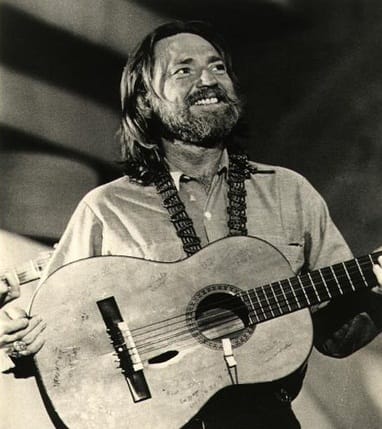
The reason any Willie Nelson record comes to be is that Willie was itching to get in the studio and record. The man’s released seventy-eight studio albums. There’s always another one coming.
The reason this specific album took the form it did is that Willie’s daughter Amy fell in love with “Rainbow Connection” when she heard it in The Muppet Movie, when it was new and she was five, and she pestered her dad to record it for the next couple of decades.
She was right to do so. Few humans are closer to being a Muppet than Willie, and the song’s wistful dreaming suits his voice and sensibility as well as anyone’s since Kermit. Even better, after a run through the lyrics, he turns our hearts over to his guitar for a while, offering a solo that, in its support of and commentary on what we’ve just heard, is a reminder of why musicians improvise.
The title track is emblematic of the whole project. It’s gentle. A touch sentimental. The album isn’t a children’s record, just like “Rainbow Connection” isn’t quite a children’s song, but it can serve. If there are children in your life and you’ve not played them Willie’s version of “I’m My Own Grandpa,” you’ve got a treat ahead. The LP is a a family affair, with three of Nelson’s daughters contributing vocals; Amy Nelson even sings an amateurish but charming lead on a song she wrote, “Wise Old Me.” There’s love here.
The production is spare. Over the years, Willie has recorded good songs with countless iterations of the basic country band. The horns on “Shotgun Willie,” for example, give the song a dramatic scope it wouldn’t otherwise achieve. But he never needs anything more than his guitar and voice, and that’s what's in the foreground here. Like Stevie Wonder’s harmonica, Willie’s guitar is always instantly recognizable. Its soft, organic tone, its repeated notes, reminiscent of Spanish guitar, feel like they’re taking us by the hand and bringing us along. His guitar, like his vocals, is never flashy. It’s just Willie.
Rainbow Connection is Willie Nelson’s forty-ninth studio album. In the twenty-five years since it appeared, he’s not slowed down. There are major albums in that discography. There are minor albums. But there’s not a one that wouldn’t repay your time. If you’ve not listened to him for a while, start here. But don’t stop. Willie won’t. At risk of seeming to make more of a claim for Willie than I intend or he would be comfortable with: He’ll soon be ninety-three. Yet a little while is the light with you. Walk while ye have the light. Listen to Willie.
Film
Jennifer (1953)
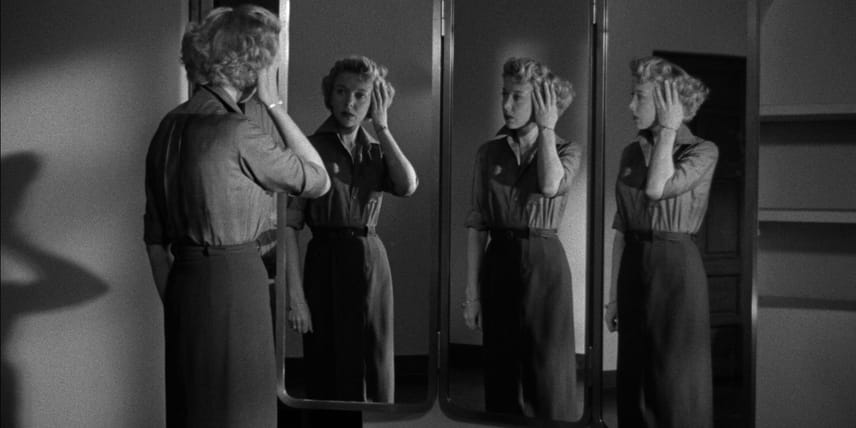
Jennifer is a modest, inessential entry in an essential genre. If you’re introducing someone to film noir, you’re not going to get to this one . . . ever? If you’re engaged with the genre in a serious way, it’s worth seeing, but it’s unquestionably a minor work.
I watch, happily, plenty of mediocre films from the first five decades of the twentieth century. That’s not what this one is. Oh, there are mediocre elements—the screenplay is at least two incidents and one plot twist short. But overall it’s well made. It’s just not up to that much.
So what is it up to, and why is it in this newsletter? It’s bringing together Ida Lupino, composer Ernest Gold, and cinematographer James Wong Howe to make a “woman takes a job as a caretaker at an abandoned mansion and things are mysterious” film. Does the large Spanish colonial mansion in the hills beyond Santa Barbara have secrets? Has Lupino’s character suffered a loss in her past? Will Howard Duff (who was at the time Lupino’s actual husband, and whose bland handsomeness is more convincing here than it usually is, given that he’s almost literally the only man in sight) fall for Lupino? Will she get obsessed with what happened to Jennifer, the previous caretaker? Have you ever seen a movie?
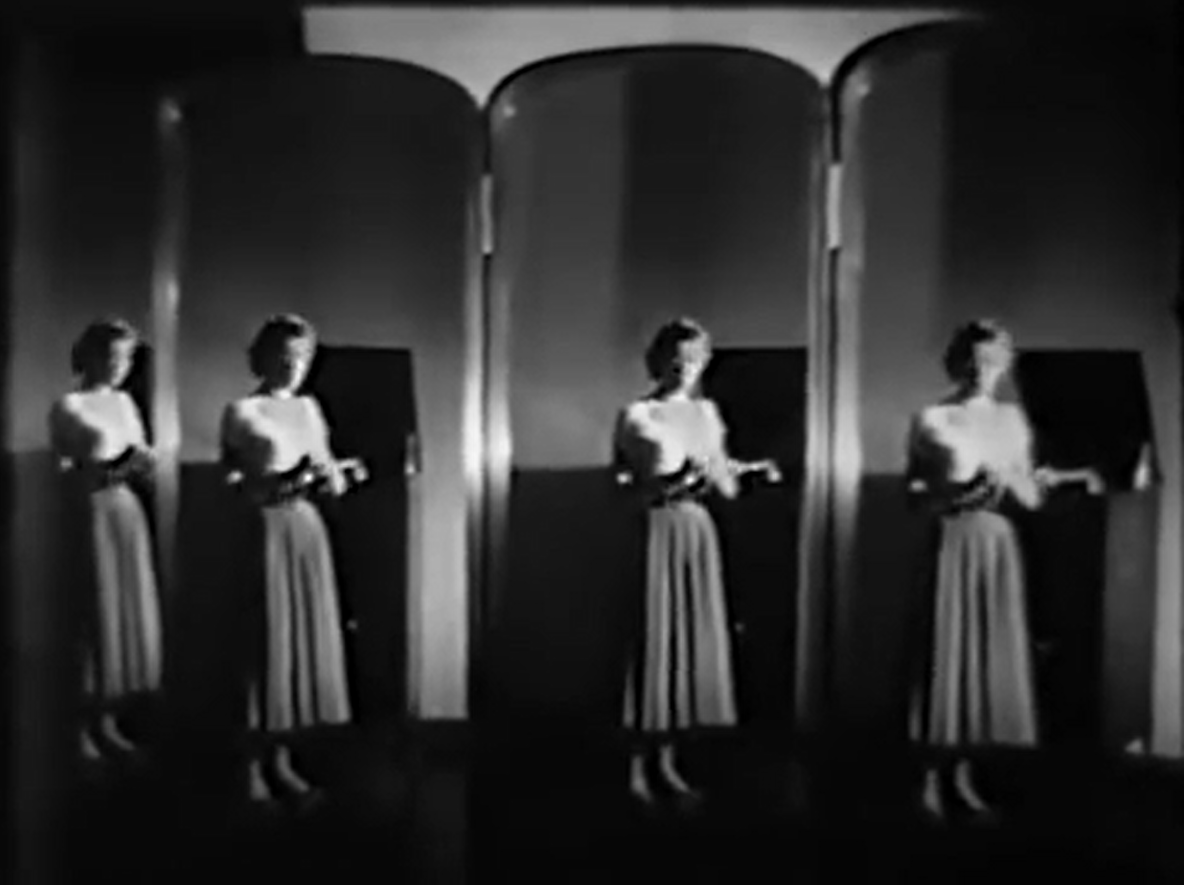
So, yeah, that’s not why I’m recommending it. I’m recommending it because it’s more interested in atmosphere than story; because Howe shoots the house and gardens so well, filling them with shadow and secrecy; because the wordless female vocals on Gold’s score shiver with mystery; because it introduces the song “Angel Eyes”; because it’s fun to see Lupino, so often cast as a worldly-wise schemer, playing a wide-eyed naif; and it’s even more fun to watch her delicately play drunk, dancing with just a hint of loose-limbed abandon, then walking down stairs with a drunk’s ineffectual caution. And because of the last shot, which is so surprising, so out there, and so cleverly made that I called Stacey to the basement and played it for her.
Oh, and because Jennifer isn’t streaming, and that means I can remind everyone that your library probably has a DVD collection, and if it doesn’t, interlibrary loan can get just about anything for you. (Or you can do as I did and buy it from Kino Lorber, where it’s one of three films collected in Film Noir: The Dark Side of Cinema XXIV, lol. That’s a lot of films noir.)
Book
Four Quartets (1943), by T. S. Eliot
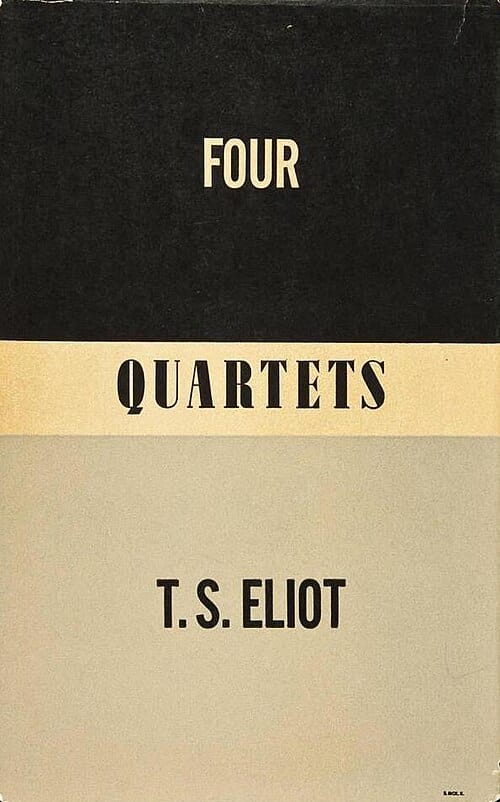
For Christmas Stacey got herself and her ten-year-old niece an anthology that consists of a nature poem for every day of winter, thinking that reading and texting about the poems would give the two of them a structure for regular interaction. It seems to have been mostly successful, with her niece enjoying engaging with writing that’s more elevated than what’s usually on offer for fifth graders and having a reason to put her responses into words.
That project is a good reminder that although poetry tends to appear daunting to those who don’t regularly read it, in reality it’s among the most rewarding art forms for an ignorant or naive reader. It takes the stuff of our everyday interactions—the words we use to text, write emails, schedule the plumber—and makes them, their arrangement and sounds and shades of meaning, the point of focus. At a fundamental level, it doesn’t require knowledge or interpretive skill. It simply needs us to attend, to be struck by a line, by words arranged in a way we'd not seen (or, just as important, heard) before. The more we attend to a particular poem, or poet, or to poetry in general, the more we can get out of it, but none of that is required to get something.
It would be an exaggeration to say that I’ve been reading T. S. Eliot’s Four Quartets that way for more than thirty years. But it wouldn’t be wholly untrue. If pressed, I’d probably say these four poems are my favorite work of poetry, but I also would never pretend to be confident that I have grasped everything that Eliot is on about in them.
My ignorance is far from total, of course. These poems are about, among other things: Time and its cyclical nature; the Annunciation, and the way it gives time and those of us stuck in it meaning and value; change and the impossible continuity of the self; a particular vision of England, its people, landscape, and history, inflected by Anglo-Catholicism; the difficulty of using the limited tool that is language to convey thoughts and experiences; war, and specifically World War II. I could keep going.
Over the decades, natural accretion of knowledge and experience has helped me get more from the poems. When I first read them at nineteen, I’d never heard of Julian of Norwich, so I didn’t recognize “All shall be well / And all manner of thing shall be well” in “Little Gidding.” Hell (literally?), I’d not read Dante, whose influence is all over these poems. That’s what happens with a work you keep by your side for a lifetime: As you change, it changes. What on first reading all those years ago was near-complete incomprehension balanced by awe at individual lines is now more like looking at a map of a place I’ve never been, but about which I’ve read a lot. I know these poems, even as there remains much that is obscure.
By the time Eliot started writing Four Quartets, while he retained his magpie habit of drawing on multiple sources, many distinctly non-poetic, to build his verse, he had mostly stopped the direct quotation and ventriloquism that makes The Waste Land such a compelling bricolage. There’s less of a sense here of him trying to impress or overawe us. His poetic voice is relatively plainspoken. It has a conversational quality (one that a scholar on the excellent episode of In Our Time dedicated to Four Quartets noted later echoes of in John Ashbery’s work), but it also comfortably, at times almost imperceptibly, shifts into the oracular, even the incantatory. The opening of “The Dry Salvages” marries both: “I do not know much about gods; but I think that the river / Is a strong brown god.” There is authority in this voice, even as Eliot disclaims confidence, lamenting “the intolerable wrestle / With words and meanings.” These poems are more questing than didactic; Eliot is trying to discover truths for himself as much as he’s trying to convey them to us. Much of what he offers has the deliberate inscrutability of a koan. At the same time, there’s an air of confidence. We trust this voice.
Lines from these poems appear in my head unbidden, all the time.
From “Burnt Norton”:
Time present and time past
Are both perhaps present in time future,
And time future contained in time past.
At the still point of the turning world.
Go, go, go, said the bird: human kind
Cannot bear very much reality.
Time and the bell have buried the day.
From “East Coker”:
In my beginning is my end.
There is, it seems to us,
At best, only a limited value
In the knowledge derived from experience.
Do not let me hear
Of the wisdom of old men, but rather of their folly
Because one has only learnt to get the better of words
For the thing one no longer has to say, or the way in which
One is no longer disposed to say it.
Home is where one starts from. As we grow older
The world becomes stranger
From “The Dry Salvages”:
Between midnight and dawn, when the past is all deception
We had the experience, but missed the meaning,
And approach to the meaning restores the experience
In a different form, beyond any meaning
We can assign to happiness.
You cannot face it steadily, but this thing is sure,
That time is no healer: the patient is no longer here.
Not fare well,
But fare forward, voyagers.
For most of us, this is the aim
Never here to be realised;
Who are only undefeated
Because we have gone on trying
From “Little Gidding”:
Midwinter spring is its own season
Whatever we inherit from the fortunate
We have taken from the defeated
For last year’s words belong to last year’s language
And next year’s words await another voice.
We shall not cease from exploration
And the end of all our exploring
Will be to arrive where we started
And know the place for the first time
I’ve read enough about Eliot to be confident that he’s not someone I could imagine being friends with. His friend Virginia Woolf wrote in her diary that “he elaborates & complicates, makes one feel that he dreads life as a cat dreads water.” F. Scott Fitzgerald, after meeting him, described him in a letter as “Very broken and sad + shrunk inside.” He was at best uncongenial, at worst unpalatable. He was wrong about many things. Yet his work, either these lines or ones from “Prufrock” or The Waste Land, is in my head every day. He has provided some of the most potent language with which I try to apprehend the world. I come away from rereading The Four Quartets feeling almost supernaturally calm, meditative, more thoughtful, more attentive to the world. “Renewed, transfigured, in another pattern.” I’m not a Christian. I don’t hold with Eliot’s argument that Christ is what gives time meaning and value. Art, though . . . what defense has time against it?