Some day I will go to London, and spend a day or two amid the dear old horrors.
—George Gissing, The Private Papers of Henry Ryecroft
And so—you want to come to London—it is a damned place—to be sure—but the only one in the world—(at least in the English world) for fun—though I have seen parts of the Globe that I like better—still upon the whole it is the completest either to help one in feeling alive—or forgetting that one is so.
—Lord Byron, letter to James Hogg, March 1, 1816
Long, long ago, in my London days, I thought, sitting alone one evening, If Byron came in, there would be nothing here to keep him.
—Sylvia Townsend Warner
The most complete compendium of the world.
—Henry James, notebook, November 25, 1881
There a man may indeed soap his own beard, and enjoy whatever is to be had in this transitory state of things, and every agreeable whim may be indulged without censure.
—James Boswell, letter
One cannot really love London. It is disappointing in every way. A foggy, dead-alive city, like a dying ant-heap.
—Cyril Connolly, journal
London is a little like a big Boston, but not very and greener.
—Robert Lowell, letter to Elizabeth Hardwick
The London literati appear to me to be very much like little potatoes.
—Samuel Taylor Coleridge, letter to Robert Southey, circa July 17, 1797
Remember this: London—literary London—is divided into innumerable cliques.
—Ambrose Bierce, letter, 1873
What are parties given for in London but that enemies may meet?
—Henry James, The Awkward Age
One of these days I will write about London, & how it takes up the private life & carries it on, without any effort.
—Virginia Woolf, diary
Her feeling for London was romantic and heroic: it was her “only patriotism.”
—Hermione Lee, Virginia Woolf
[Samuel Johnson] attended church . . . in a crowded mixed parish which included two Pissing Alleys.
—Jerry White, London in the Eighteenth Century
We have noe City, nor Streets, nor Houses, but a Chaos of Dirty Rotten Sheds, always Tumbling or takeing fire.
—Nicholas Hawksmoor, letter to Dr. George Clark
’Tis certain, that several had minatory dreams of the conflagration of London.
—John Aubrey, Miscellanies
Pish! A woman might piss it out!
—Sir Thomas Bludworth, Lord Mayor of London, at the start of the Great Fire
All the City’s finest buildings and churches had vanished: men were bemused and lost, lacking the familiar landmarks. Even the waters in the broken fountains seemed to boil, and evil-smelling smoke swirled up from wells and cellars like fumes from hell.
—Jenny Uglow, on the aftermath of the Great Fire, A Gambling Man
In the mean season, because there was a rumour that I was dead, I passed through London.
—Edward VI, journal, July 23, 1549
Always to express your depression in appropriate surroundings—e.g., to avoid London whose gloom is squalid, and which, consequentially, squalidifies and degrades the form of depression by introducing an element of despair and futility not proper to the natural melancholy of a historic sense linked by self-dramatisation with a love of beauty.
—Cyril Connolly, London journal, 1928
The squire had taken for them a gloomy lodging in Sackville Street. Lodgings in London are always gloomy. Gloomy colours wear better than bright ones for curtains and carpets, and the keepers of lodgings in London seem to think that a certain dinginess of appearance is respectable. I never saw a London lodging in which any attempt at cheerfulness had been made, and I do not think that any such attempt, if made, would pay. The lodging-seeker would be frightened and dismayed, and would unconsciously be led to fancy that something was wrong. Ideas of burglars and improper persons would present themselves.
—Anthony Trollope, The Last Chronicle of Barset
This afternoon I became very low-spirited. I sat in close. I hated all things. I almost hated London. O miserable absurdity!
—James Boswell, journal, February 16, 1763
London’s passions and whims, grown stale, are fantastic weeds in the sere and yellow leaf.
—Haldane MacFall, 1928, on The Yellow Book
Here I feel that all the others are as dead as I.
—Henry Adams, on visiting London, 1890
What walks I have had in London streets; haunted walks—wretched ones.
—Edward Burne-Jones, letter to Mrs. Gaskell
It was a crushed but unrepentant courage, the product of the London streets.
—Penelope Fitzgerald, Charlotte Mew
Often, when navigating London, there is a sensation of the rug being pulled from under you.
—Anna Kinsella, Look Here
De Quincey’s time in London was currently spent binging on opium and books, both great stoppers of clocks.
—Frances Wilson, Guilty Thing
I was too drunk in London to get my hair cut.
—Evelyn Waugh, letter to Nancy Mitford
Over-indulgence in sex and gin was its main surface characteristic.
—Douglas Goldring on 1920s London life, Odd Man Out
The West End is, of course, more apt than some districts to suffer from the incursions of what we used to call the Bright Young People; what I now think of as the Flash Trade. This menace has receded since pre-war days when the smart people were discovering the pubs and the craze for darts even brought them swarming into the Public Bar. It was a terrible thing to see this happening to a pub.
—Maurice Gorham, Back to the Local
There are some parts of London which are necessary and some parts which are contingent. Everywhere west of Earl’s Court is contingent, except for a few places along the river. I hate contingency. I want everything in my life to have a sufficient reason.
—Iris Murdoch, Under the Net
Shooters Hill is dreaming London, dreaming London up: low on its northern slope a chalk fault that collapsed creating the Thames valley, gouging out a life-sump for the Neolithic swill to fill, the pallid Morlock scrum, chalk-mining chavs blowing their barter on bone bling in settlements at Plumstead, Woolwich, barnacled below the sleeping hills’ north flank.
—Alan Moore, from London: A Book of Disappearances (ed. Iain Sinclair)
I would live in London shirtless, bookless.
—Charles Lamb, letter to William Wordsworth
Greeley says of London, “The morning to sleep, the afternoon to business, and the evening to enjoyment, seems the usual routine with the favored classes.” They have no morning life then. They are afternoon men! To begin the day at noon!
—Henry David Thoreau, journal, January 20, 1852
From the highest to the lowest, this people seem fond of sights and monsters.
—Oliver Goldsmith, The Citizen of the World
There was a middle-class sense that London was full of gamblers, card-sharpers, extortionists and other conmen.
—Judith Flanders, The Victorian City
This passion for crowds is no where feasted so full as in London. The man must have a rare recipe for melancholy, who can be dull in Fleet-street. I am naturally inclined to hypochondria, but in London it vanishes, like all other ills. Often when I have felt a weariness or distaste at home, have I rushed out into her crowded Strand, and fed my humour, till tears have wetted my cheek for inutterable sympathies with the multitudinous moving picture, which she never fails to present at all hours, like the shifting scenes of a skilful Pantomime.
—Charles Lamb, letter, February 15, 1802
The London crowd was a sentimental crowd ever ready to support the wronged.
—Jean Plaidy, Murder Most Royal
London, I am told, is the best hiding-place in the world.
—Samuel Richardson, Clarissa
When William Morris, in News from Nowhere, imagined an ideal future for England he wiped out London.
—Lewis Mumford, via David Matless’s Landscape and Englishnes
When I left the coach, the strange speech of the cabmen and others waiting round, seemed to me odd as a foreign tongue. I had never before heard the English language chopped up in that way. However, I managed to understand and to be understood, so far as to get myself and trunk safely conveyed to the old inn whereof I had the address. How difficult, how oppressive, how puzzling seemed my flight! In London for the first time; at an inn for the first time; tired with travelling; confused with darkness; palsied with cold; unfurnished with either experience or advice to tell me how to act, and yet—to act obliged.
—Charlotte Bronte, Villette
Here I am once more in this Scene of Dissipation & vice, and I begin already to find my Morals corrupted.
—Jane Austen, letter to her sister, Cassandra
In London, the outdoors had been tidied up into parks.
—Joanna Quinn, The Whalebone Theatre

From Bret Rensselaer’s top-floor office there was a view westwards that could make you think London was all greenery. The treetops of St James’s Park, Green Park and the gardens of Buckingham Palace, and beyond that Hyde Park made a continuous woolly blanket. Now it was all sinking into the grey mist that swallowed London early on such afternoons.
—Len Deighton, Berlin Game
In the Victorian era London fog had been linked to crime, immorality, transgression, and despair, but the association of fog with death in the minds of so many writers in the interwar years is notable.
—Christine L. Corton, London Fog: The Biography
Clowds of Smoake and Sulphur, so full of Stink and Darknesse.
—John Evelyn, Fumigation; or, The Inconvenience of the Aer and Smoake of London Dissipated
He sniffed the air and said, “Now it’s beginning to smell like London again,” and when I asked him what he meant he said that for instance Paris smelled like apples and French cigarettes and Seville like rancid olive-oil and hair-oil and Barcelona like decaying bodies and bull sweat. London, he said, smelled of a well-bred mustiness of old newspapers boiled with vegetables. But I thought it had an evil smell. I know it did: The Sulphur Fumes of Hell.
—Elaine Dundy, The Old Man and Me
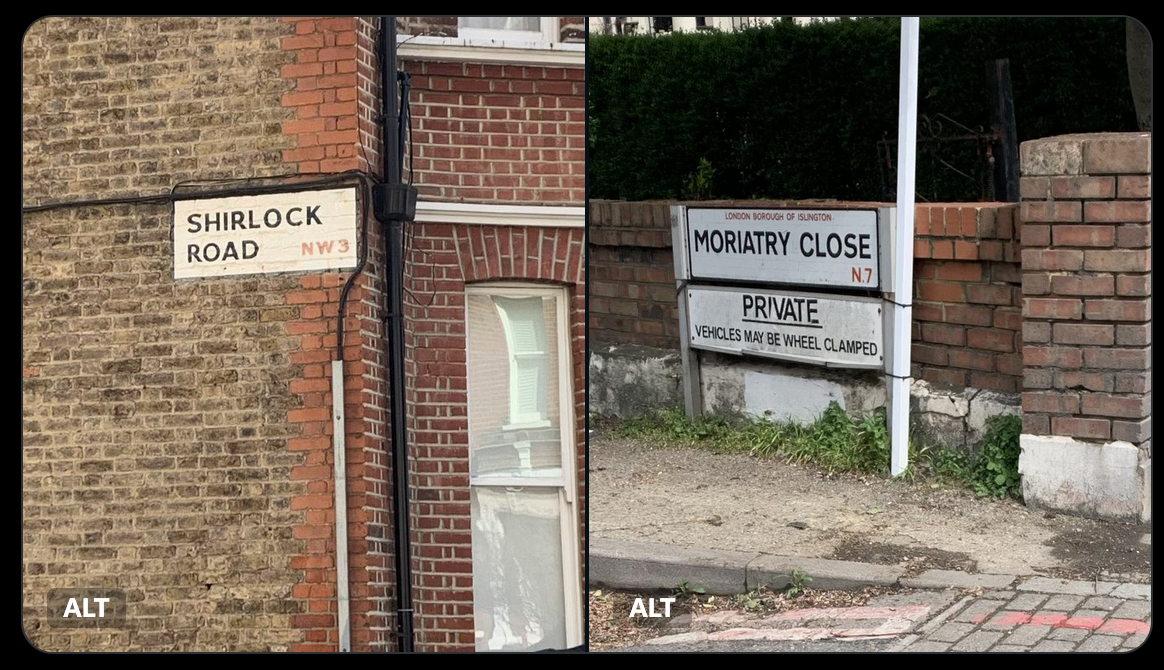
The air of London is sweeter for my presence.
—Arthur Conan Doyle, “The Final Problem”
A grey dusty withered evening in London city has not a hopeful aspect.
—Charles Dickens, Our Mutual Friend
Fresh drinking milk was available in small quantities from cows that were walked along the streets, as mobile bovine vending machines. The Lactarian in London's St James’s Park provided some fashionable milk, drunk warm, fresh from the udders of cows able to exercise.
—Emily Cockayne, Hubbub: Filth, Noise, and Stench in England
When I was a small girl in Hampstead in the Twenties, there were sheep grazing on Hampstead Heath, chair menders, knife grinders, and muffin men in the streets (the muffin men, like the sheep, were seasonal), lamplighters who walked at dusk from gas lamp to gas lamp, and small shops that sold pennyworths of licorice and Phillips soles, with which you repaired your own shoes. Milk came round in a pony cart. There were still plenty of horse-drawn vans.
—Penelope Fitzgerald, The Afterlife
It was a mild winter evening; a little fog still hanging about, but vanquished by the cheerful lamps, and the voice of the muffin-bell was just heard at intervals; a genial sound that calls up visions of trim and happy hearths. If we could only so contrive our lives as to go into the country for the first note of the nightingale, and return to town for the first note of the muffin-bell, existence, it is humbly presumed, might be more enjoyable.
—Benjamin Disraeli, Lothair
There is nothing in London that is not curious.
—Charles Dickens, letter, March 22, 1851
By seeing London, I have seen as much of life as the world can shew.
—Samuel Johnson, via James Boswell, Journal of a Tour to the Hebrides
God help me, I am beginning to like London.
—Jessa Crispin, The Dead Ladies Project
A wild month, intoxication of London as before.
—Cyril Connolly, journal